#header-inner { margin: auto; }
Showing posts with label Nutrition. Show all posts

Monday, April 16, 2012

Chase will officially be two months old this week. Guess what? He slept from 10:30-6:15 on Thursday night. We were elated. At 6:16, Beau turned to me and said, "Well, he will be sleeping through the night from now on". Ok! What this means: I feed him at 9:30, put him to bed right after, close the door to his room, and go get him at 6:30 in the morning.

Doesn't he cry?

The first two nights, he did. I had to pray and put my pillow over my head as I dealt with Mommy Guilt. But last night, he didn't make a peep. He slept 8 full hours, no problem. What a sweet baby!

As I recently read in a book, by allowing babies to eat in the middle of the night, we basically train them to eat in the middle of the night. It makes sense. He is gaining weight, is plenty chubby in the cheeks, and takes good feedings throughout the day. I need to sleep a full night to take care of my family. He needs to sleep a full night to grow and thrive. It is a good time to implement these changes. I have always been a proponent of the "cry-it-out" method of sleep training, but I have also always been hesitant to go full steam ahead with the process. I couldn't take my baby crying. Now I know that the process works, and that it is beneficial for all involved. Any hesitancy or guilt is gone, and we have a happy baby and a rested mama.

While nursing, I get a chance to read on my iPad. There is a free online library called Chest of Books. There is a huge, free section on health and nutrition. I have been so excited to explore! I read a book from 1921 by a holistic physician who claimed that his contemporary Americans ate an average of 125 pounds of sugar each year. At that time, diabetes and heart disease were beginning to be problematic. He warned his readers to cut down on their consumption of carbohydrate-rich foods and take in a diet rich in protein, vegetables, and fruits. How telling! 90 years later, we are reaping the poor health our great-great-grandparents sowed generations ago. And here we thought "paleo" was a hot new buzzword....

Monday, February 6, 2012

Paleo Pregnancy- Supplements

Here is a little nugget of inspiration from The Food Lovers' Primal Palate:

What eating sugar DOES NOT do:

  1. Eating sugar does not make you wrong.
  2. Eating sugar does not make you a bad person.
  3. Eating sugar does not make you a failure.
  4. Eating sugar does not make you worthless.
  5. Eating sugar does not mean you don't care about your health.
  6. Eating sugar does not mean that you are lazy.
  7. Eating sugar does not mean that you are not Paleo!
What eating sugar DOES do:
  1. Eating sugar makes you store body fat.
  2. Eating sugar makes your skin break out.
  3. Eating sugar makes you age faster.
  4. Eating sugar makes you depressed.
  5. Eating sugar causes more symptoms of pms.
  6. Eating sugar compromises digestion.
  7. Eating sugar compromises your immune system.

I liked it. It sums up why I like to follow the "80/20 rule"- follow good dietary rules most of the time, but allow for a little wiggle room. Like my husband always says, "I care about quality of life, Jennie"- meaning he will not eat broccoli every night for dinner on the off chance he may add three years to his life.

Balance. Balance.

On that note, I have decided to forgo the post on exercise. You all know you should exercise. Most of you like to exercise. It is very feasible and even recommended to exercise as much as possible when pregnant. Good for mama's brain, body, and baby.

But if you don't exercise, don't feel bad.

Since this series is supposed to be pregnancy-related, I did want to share the supplements I have been taking this time. I have told you how I have struggled with many (minor, really) health issues in pregnancies past and because I am a creature who attempts to make my life as pain-and-problem-free as possible, I wanted to experiment on myself to see what safely makes my body work a little better.

First, this:It is a magnesium citrate powder. Did you know that most Americans get far too much calcium and not enough magnesium? Calcium contracts muscles, excites nerves, and clots blood (in a good way, like in wound healing). Magnesium relaxes muscles, calms nerves, and keep blood flowing. Pregnant women are advised to ingest plenty of calcium, but if the calcium/magnesium balance in the body is off, the result can be a cranky insomniac with crampy legs. Anyone been there? I have, but not this time.

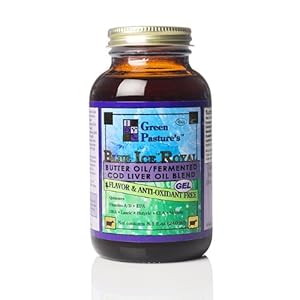
Next, this: This is a blend of high vitamin butter oil and fermented cod liver oil. The cod liver oil provides highly absorbable vitamins A, D, and K. Modern diets are deficient in most of these fat-soluble vitamins, because most people are scared of "fat". These vitamins bolster and protect the function of the brain and nerves of mama and baby. The butter oil acts as a catalyst to help your body absorb these fat-soluble vitamins as well as any other vitamins you ingest. Beware: these pills smell and taste like fish. Not so great for a pregnant nose...I would take them with plenty of orange juice!

Then, this:

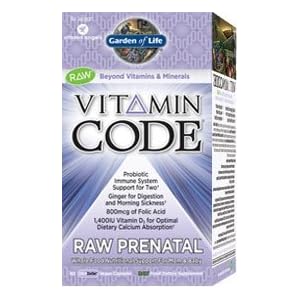
While I don't think one necessarily needs a "raw" prenatal (in freeze-dried capsule form, really?), I liked this prenatal because it has plenty of folic acid and an easy-on-the-tummy iron formula. It also has a blend of 25 fruits, vegetables, greens, and sea plants. I will continue to take it while I am nursing. While I honestly believe that my diet gives me most of the nutrition my body needs to build a baby, I would never take the chance that I may be missing something of crucial importance. It is a wise decision to begin building up stores of nutrients for months before conception, but please make sure you take a prenatal as well.

Apparently my blogging is interfering with one Call of Duty, so I will post more on this later. :)

Monday, January 23, 2012

Crawling Out From Under the Rock

There are a few reasons I have not really felt like blogging lately, but I think I am ready to post. I am sure my posts won't be very regular, but I really do miss writing about things. And having a reason to upload my pictures to the darn computer.

Here is what is going on over in our little family...

- Less than a month to go until baby gets here

- Lots of sickness coming and going in the house

- School going well for Jackson

- I took a leave of absence from BSF leadership until after the baby. We still attend class, though.

- Reading and researching a lot of paleo/primal nutrition and creating a family framework

- Figuring out how to wisely deal with transitioning from disciplining/ teaching an older child for attitude instead of disobedience

Whew. While the blog has been quiet, we have been busy.

Of course, the two things that take a lot of my attention are preparing for baby and researching nutrition for my family.

This pregnancy, I have incorporated a whole new nutritional platform and I have seen the benefits so clearly during the last nine months. Are you familiar with the paleo/primal way of eating? I was not, really, so I got as much information as I could via books and my favorite, Google. How I love reading blogs :)

While in pregnancies past, I have struggled with nausea, excessive weight gain, a foggy head, carpal tunnel syndrome, achy legs, and insomnia, with this pregnancy, all of these problems have been lessened or removed. This is not to say I am scooting through an entire pregnancy as a smiling earth mama. There are hard days. But truly, it has been the easiest pregnancy so far.

God is gracious, and knew I could not handle another difficult pregnancy. But additionally, I was led toward this school of nutritional thought.

I hope to post a few specifics of what I have incorporated, just to share with you. Not everyone loves this kind of stuff like I do, but I hope that a few ideas can help mamas that are pregnant or trying to get pregnant.

I plan to write a short, probably boring, series on Paleo Pregnancy.

Since pregnancy is such a large chunk of many of our lives, after all. ;)

Until then. Whenever that may be!

Thursday, September 1, 2011

Deep Nutrition- Part 3

I have read so many different books and articles on traditional nutrition that I have come to distrust the medical community as a whole.  I am not proud of this, and my husband thinks I am a loon for my viewpoints. However, after working for a major pharmaceutical company and doing nutritional research for years, I cannot take any other stance on the matter. I believe most mainstream medical professionals are driven by profit because they have to be! Insurance companies, lawsuits, and drug-happy patients are all working against their presumably original desire to simply heal people.  And this is not a hard and fast rule that applies to all doctors, I just think it is a general rule that has contributed to the sickening of the American people. 

So let me share with you one medical professional's views on the subject:

"Doctors get their information from researchers. Researchers can only do research when they can get grant funding.  These days, grants come from industry or special interest groups, and tend to support either the use of expensive medications and technology, or a demand for more medical coverage for one of many speical interest groups.  I didn't know research had to fall into one of these two categories to be funded until Luke and I took a plane trip to California to meet with researchers at UCLA and UCSF.  There, I met with over a dozen doctors and PhDs to bring up the possibility that there might be an obvious, though currently overlooked, relationship between modern food and disease.

The trip was a real eye-opener.  These researchers held fast to the idea that their primary directive was improving human health.  But it soon became clear that their more immediate goal, by virtue of the realities of economics, was the acquisition of grant funds, necessitating never-ending compromises between the exigencies of financing and the integrity of the science.  I learned from an epidemiologist that various agricultural interests funded most of his research in nutrition, and out of financial necessity, he was directed toward the promotion of the largest crops: fruits.  As an epidemiologist, he was unaware that excess fruit consumption leads to health problems due to the high sugar-to-nutrient ratio in fruit.  And he was surprised when a collegue pointed out that she'd found, after advising her patients to eat the recommended three to six servings of fruit a day, that doing so raised their triglycerides to unhealthy levels.

Hoping to drive home the point that our bodies demand more nutrition than we can get from fruit, vegetables, grains, and low-fat meat, and hoping to stir up interest in doing more research on nutrition and optimal fetal and facial development, I described the research of a pertinent study.  It showed that one in three pregnant women consuming what mainstream research suggests would be a healthy diet nevertheless gave birth to babies with dangerously low levels of vitamin A in their blood.  Vitamin A deficiency is associated with eye, skeleton, and organ defects.

The epidemiologist was fascinated but admitted that his reliance on funding from fruit growers bound him to continue producing more and more research just like he'd already produced-showing fruits are "good for us".  I learned that neither he nor anyone else at UCLA would likely be able to pursue this new nutritional issue or anything similar because there was no giant industry to support it." 

I personally think fruit is healthy- the spectrum of fruit does carry a wide variety of bioavailable nutrients.  However, the best way to assimilate these nutrients is to eat the fruit cooked with a bit of butter.  Or a lot of butter. The butterfat has a component referred to as "Activator X" (Google this term with the name Weston A. Price to find out more) that allows your body to use more of the vitamins in fruits and vegetables.  Have you ever baked an apple with raisins, cinnamon, and butter? Good heavens!

Have you heard this school of thought before? What do you think?


Thursday, August 18, 2011

Deep Nutrition- 2

Shanahan has a chapter devoted to a short scientific discourse on beauty. I learned things that I would have never thought about! For instance, if we ate correctly, most women would have the typical feminine hourglass figure, the outward manifestation of inward fertility. It made me think of all of the reproductive problems we have in society. Could so many diseases of affluence be reversed by eating traditional foods?
"Voluptuousness is an indication of healthy female sexual dimorphism, while a lack of voluptuousness indicates a problem. Normally, the hips and bust develop during puberty as a result of a healthy surge in sex hormones. These developments involve expansion of the pelvic bones along with the deposition of fat and glandular tissue within the breasts. But women whose genetics are such that their spines are abnormally short or their hormonal surge less pronounced- or whose diet is such that it interferes with the body's respnse to hormones-end up with boxier figures. If they're thin, they'll end up as bananas. If they put on weight, it gets distributed in a more masculine pattern- in the belly, on the neck, and around the upper arms- and they'll become an apple. Today, after three generations of trans fat consumption (which interferes with hormone expression), and with daily infusions of sugar (which interferes with hormone receptivity), hourglass figures have become something of a rarity. According to a 2005 study commissioned to Alva products, a manufacturer of designers' mannequins, less than ten percent of women today develop the voluptuous curves they're supposed to." (54)
I have never loved my apple shape (getting more "apple-y" by the week, mind you!) but I desire lots and lots of grandchildren, so I want to feed my daughter the best possible food for her own future fertility. Could good food help ensure reproductive health from the inside out? I would like to think so.

As a caveat, the author is not a Christian and believes in evolution, although she references "Intelligence" in the design of the body on a genetic level. I do not believe in evolution, obviously; I know God is sovereign and is the Creator and Sustainer of our bodies.

Tuesday, August 16, 2011

Deep Nutrition- 1


Have you heard of this book?

It is, hands down, the best book I have ever read on nutrition.

And I have read many. A vain, shameful amount, really.

The author, Catherine Shanahan, is medical doctor as well as a molecular biologist. She also is very involved in the science of traditional nutrition. That this book is written by someone of such credentials is very important to my husband, who has finally given some credence my mad rants about raw milk and bone broths.

Dr. Shanahan is highly trained and very technical in her understanding of the depth of the role that nutrition plays not only in our bodies, but the bodies of our offspring and so on. Therefore, a good portion of the book reads like (what I assume would be) a molecular biology textbook, but it is worth dissecting and understanding. I want to share a few of the most interesting things with you over the next few weeks. I always have it in the back of my mind that mommies are the first line of both defense and offense in the health of the next generation. I just never realized the extent to which this is true. What we put into our bodies affects us on the genetic level, and while anomalies may not manifest themselves in our own lives presently, be quite assured that a poor diet will negatively impact you in the near future, and your children exponentially more so!

Wow, that was kind of ominous.

There are plenty of easy, affordable ways to care for your "temple". And nothing that has been done cannot be undone, in time.

Will you scan through this book with me?

"You can see evidence of this retraining in laboratory animals. Dr. Randy Jirtle at Duke University studied the effects of nutrient fortification on a breed of mice, called aguouti, known for their yellow color and predisposition for developing severe obesity and subsequent diabetes. Starting with a female agouti raised on ordinary mouse chow, he fed her super-fortified pellets enriched with vitamin B12, folic acid, choline, and betaine and mated her to another agouti male. Instead of the usual, overweight, unhealthy yellow-coat babies she would normally give birth to, she instead bore brown mice that developed normally. You could interpret this study as follows: The agouti breed has regulatory DNA that has essentially been brain damaged by some past traumas in the history of the lineage. As a result, agouti chromosomes, unlike other mice, are typically incapable of building healthy, normal offspring. In this study, researchers were able to rehabilitate the agouti's genome by blasting the sleepy genes with enough nutrients to wake them up, reprogramming their genes for better function.

"This has enormous implications for us, as researchers are finding abnormal regulatory scars all over our genes, records of our ancestors' experiences- even with the weather. Toward the end of WWII, an usually harsh winter combined with a German-imposed food embargo led to death by starvation of some 30,000 people. Those who survived suffered from a range of developmental and adult disorders, including low birth weight, diabetes, coronary artery disease, breast and other cancers. A group of Dutch researchers has associated this exposure with the birth of smaller-than-normal grandchildren. This finding is remarkable as it suggests the effects of a pregnant woman's diet can ripple, at the least, into the next two generations. Unlike the agouti mice, which required massive doses of vitamins, these people would possibly respond well to normal or only slightly above normal levels of nutrients as their genes have been affected only for a short while- just a generation or two (unlike the mice)- meaning it might not take quite so much extra nutrition to wake them up".

It certainly has made me think twice about the food I am putting into this body with baby #4, especially since all of my pregnancies have been in the short period of 5 years. What do you think? Do you know the health your mother was in? Your grandmother?

Wednesday, November 14, 2007

How Then Should We Eat?

I really enjoy reading about health and nutrition. If I do not put the Lord first each day, even before I get out of bed, then I am in danger of not reading the Word at all. There is always a book, article, or web page with something interesting to learn about the human body.

There is so much information available, and so much of it is conflicting. I know one reason I read so much is that I want answers. I want to know for sure what is best for my body. I have realized that I live in a fallen world and so nothing will ever be perfect. I will never have perfect health. My body will eventually weaken and return to dust. I know that, but I still desire to take good care of the vessel the Lord has given me. I desire to provide the best nourishment I can for my children. Plus, the human body absolutely fascinates me. I love learning about how my body is affected by what I eat, how I exercise, and the environment around me.

My health interests have shifted toward biblical nutrition in the past two years. I read many secular publications on health, but I really study books having a God-centered focus. What else really matters? I wanted to compare The Maker's Diet by Dr. Jordan Rubin and Your Body, God's Temple by Dr. Ronald Kleyn. The latter is something I picked up from a clinic I used to call on in Fresno; the former is written by a well-known naturopath.

While there are many differences between the two books (which I am using to represent two nutritional schools of thought), the main discrepancy between the two is as follows: Rubin advocates a diet rich in protein/animal foods, while Kleyn believes we should all eat mainly plant foods.

Conventional medical research is on the side of traditional vegetarianism. In 1968, Danish researchers replicated the "Daniel Diet" (Daniel 1- He and his friends refused to eat the king's delicacies, subsisting on only vegetables and water for 10 days. They appeared healthier and stronger than those who ate meat the whole time and thus everyone in the kingdom was put on a vegetarian diet). The Danish researchers placed a group on men on three eating plans: first, they ate a mixed diet of meat and vegetables; then, they ate a high animal-protein diet; finally, they were fed a strict vegetarian diet. After diet period, they were tested for endurance on a stationary bicycle. Their endurance was more than double after the vegetarian diet.

Another medical fact I find intriguing is this: "Carnivores have short, smooth intestinal tracts which allow them to rapidly digest and eliminate the decomposing flesh. Our intestinal tact is long and rippled" (Kleyn 97). It appears that the Lord designed our bodies for a vegetarian-centered diet.

Kleyn also draws upon numerous clinical studies that show how hypertension, heart disease, hyperlipidemia, diabetes, arthritis, cancer, obesity, and other diseases are lessened or eliminated by switching to a strict vegetarian diet.

His dietary conclusions are to reduce our intake of animal fats and replace most of our calories with those found in fresh fruits and vegetables, whole-grain starches, beans and tofu, raw nuts and seeds, and extra-virgin olive and coconut oils. Kleyn believes it is biblical to exercise moderation and prudence with animal products in our diet.

Dr. Jordan Rubin believes that our diet should include a substantial percentage of animal products. His own amazing journey to health was achieved through this way of eating. He believes that the "Levitical Diet" (Leviticus 11, Deuteronomy 14) take precedence over "The Genesis Diet" or "The Daniel Diet".

In Leviticus 11, God gives the Israelites a new diet, which includes meat from clean animals, fish with fins and scales, and clean birds. The Israelites were not to eat unclean animals, birds, or fish, including pork and shellfish.

Dr. Rubin also advocates consumption of raw milk and low-carbohydrate, high fiber foods like cruciferous vegetables, nuts, and seeds. He believes we should add fermented foods to our diet to help with digestion. Healthy saturated fats likes high-vitamin butter and coconut oil stimulate our immune systems.
Link
Dr. Rubin's work is also rich with scientific evidence supporting his case. Instead of using conventional medical research, Dr. Rubin presents his readers with interesting facts about the body and food. For example, on p.153, he states "Eggs contain all known nutrients except for vitamin C...they can actually help reduce the risk of both heart disease and cancer". Also, "Raw liver figures prominently n many world-renowned alternatice cancer protocols, including the Kelley and Gerson programs" (Rubin 153).

Dr. Rubin's book is a fascinating read. I just studied it again recently, after my girlfriend turned me onto the wonderful world of holistic nutrition. Dr. Rubin's ideas correlate with Dr. Weston A. Price's research from the 1930's. Whole foods, with an emphasis on organic animal products, promote health and longevity. Dr. Rubin's work is intriguing because of all of the information about how nutrition affects the human body. I would love to lend out my copy to anyone who is interested.

While this comparison is anemic compared to what I wish I had time for, the conclusions I
have drawn are these:

1. Organic food is best for my family
2. Whole, unprocessed animal foods will contribute to my health
3. Organic fruits and vegetables should make up the bulk of my diet
in order to get the essential vitamins, minerals, water, and fiber they contain.
4. Starches should be unprocessed and whole and should be eaten in moderation.
5. Everything should be eaten in moderation, and for the purpose of sustanance.

My Creator desires that I serve Him to the best of my ability, which includes being a godly wife and mother. I am to be constantly growing in my walk as a result of progressive sanctification. I am to raise my children for Him and have strength to positively impact others for the Kingdom. In order to do this, I must treat my body and the bodies of my family as temples (and prayerfully, eventual temples) of the Holy Spirit.

God has put everything on this earth for our benefit and because of Jesus Christ, nothing is unclean as long as it is used properly and with wisdom. However, there are "better" choices I can make to protect my health. I encourage you to seek out God's wisdom in your health and the health of your family. He has much to say on the subject.

Thursday, November 8, 2007

Candida Albicans


This is the fancy (read: Latin) name for yeast overgrowth in the body. As part of my eternal quest for health (ok, and thinness), I ordered this book from The Co-op.

I had been suspicious for a while that I have candida. I am not in the minority. "Three our of four females will experience at least one episode of Candida and most of these will suffer from recurrent infection" ( Tenney 7). I used to eat excessive amounts of sugar, even when I thought I was in good health. There are proportionately massive amounts of sugar in processed foods, which I also used to consume regularly. In high school, I would eat a Carmel Apple lollypop for lunch and pretzels for dinner. I thought I was being "healthy" by not eating a lot of food, but I was destroying the delicate balance of my body. God did not intend for us to eat the way many of us eat. From Tenney's book, Candida Albicans, p.7, here are some frightening statistics:

In one year, the Average American consumes:
100 lbs. refined sugar
200 sticks of gum
63 dozen doughnuts
20 gallons ice cream
300 cans soda pop
18 lbs. sweets and candy
50 lbs cakes and biscuits

Holy cow. Tenney gets her stats from Michael Murray's Encyclopedia of Natural Medicine, which was published in 1991. Those numbers have to be even bigger now. Anyway, there is a direct correlation between how much sugar you eat and your being affected by candida. It is a single-celled fungus (eeew!) which releases poisons into your body as it multiplies. It gets into the bloodstream. A by-product of candida is ethanol (an alcohol) which also grows quickly. Ethanol, along with acetaldehyde- related to formaldehyde- wreaks havoc with nerve function and fatty acid oxidation, among other things (6).

How does the yeast grow and thrive in our bodies? Sugar. White, brown, refined, unprocessed, milk sugar, honey, molasses, whatever. If it makes your food sweet, it feeds the yeast (fake sugar is the topic of another important lecture). Internally, candida can be causing nutrient deficiencies, upsetting normal intestinal flora, and supressing our immune systems. Externally, symptoms include eczema, psoriasis, acne, nail infections, and rashes. Physiologically, it can cause food allergies, intestinal upset, horrid PMS symptoms, and thyroid and adrenal glad problems.

Sometimes, candida manifests itself as nail infections or the dreaded female "yeast infection". An antifungal is often prescribed. Occasionally, physicians will misdiagnose and prescribe antibiotics for a candida infections, which makes problems worse. A broad-spectrum antibiotic further messes with your intestinal tract by killing of friendly flora as well as the bad stuff. Some conditions necessitate pharmaceuticals to rectify the situation. This is not one of them. It is hard to do, but one must cut all sugar from the diet. The fungus, having nothing to feed on, will eventually starve and die off.

"All sugar" means any processed foods, lunchmeats, dairy products (lactose is a sugar), fruit for a while, bread, alcohol, whie flour products, and the obvious sweet offenders. This is not easy to do. I have a huge sweet tooth. I have not been able to cut sugar out completely, but when I do, I feel so much better. Sugar is a drug, anyway (we'll discuss Sugar Blues soon), so my body feels better without the unnatural, addictive substances in it.

LinkWithin

Related Posts with Thumbnails